
With the 2024 election, misinformation can spread with a single AI generated post that can alter election outcomes in an instant.
During this crazy election cycle, it’s been imperative for voters and Cal High students to differentiate what’s true and what’s not.
“Fake news can mislead voters and cause them to make decisions that they wouldn’t have made if they had been given the proper information,” junior Sydney Wright said.
Wright also said misinformation projects a false image about the candidates that may not always be true.
Fake news and misinformation have been a commonplace in presidential elections for decades. But with the rise of Artificial Intelligence (AI), deep fakes have come to light and played a more destructive role.
A deepfake is an AI-generated video of a real person used to generate false information. Deepfakes in politics aim to mislead voters into making uninformed decisions.
“I think the ease of sharing information and the internet and social media has adjusted our attention span for our willingness to read beyond just a headline,” Cal High librarian Jessica Bailey said. “Even me, a librarian who’s a prolific reader, really struggles to sit down and read through a really long complicated piece of news or literature [and] journalism.”
In March 2023, former President Donald Trump was “photographed” getting arrested by a New York officer. This video was posted all over social media by people that believed this was true. This incident severely affected voters since it misled them into believing that Trump was no longer running for office because he was going to jail.
This was one of the many instances of deep fakes and how they can affect day-to-day life.
Social media is one of the biggest struggles for sharing the right educational information about both parties and candidates.
When it comes to social media, there’s really no way of omitting fake news or misinformation about anything.
“Social media has become one of the biggest outlets for almost all of the information that we receive, making it easy for misinformation to spread as easily as the truth.” Wright said. “This is especially dangerous to young people who have grown up learning to rely almost exclusively on social media [and] who are prone to taking anything they see as fact.”
An example of social media misinforming the public came from Trump himself.
According to a CNN article, Trump spread fake news on Truth Social about Kamala Harris’ Detroit crowd size by saying she was escorted out of the airport. He then said Harris should be “disqualified” from the 2024 election.
There are so many people whose main source of news is social media, which can be incredibly dangerous when it comes to misinformation.
“Social media is used by a lot of teenagers [and] a lot of young people,” senior Thomas Helgren said. “Some of them definitely use it as their only source of information.”
With social media already being the most accessible resource to young voters and voters in general, it becomes harder for them to get information from other places.
This especially applies to teenagers and high school students.
“I know a lot of people don’t read the news or look up articles or anything about politics,” Helgren said. “So if misinformation or information in general about politics is coming through social media, then it’s going to affect us more than through any other media.”
Another dangerous way misinformation can spread is by the candidates themselves and their statements.
In the 2024 presidential debate, Trump infamously brought up the claim that Haitian immigrants are eating domestic animals in Springfield, Ohio, even when it was proven to be false.
The reason why this is still so harmful is because there are many people who watch presidential debates to learn information bout the candidates and issues.
But if a candidate says something false, regardless if the debate moderators are fact checking the information, it can sway and manipulate the opinions of voters who only watch debates.
”When the candidates themselves spread false information about their campaigns, it promotes blind trust in their leadership and proves how many people are unaware of the facts and will believe anything an authoritative figure says,” Wright said. “This is dangerous to society because we need informed voters to make decisions that will influence the state of politics in the future.”
With so many ways that misinformation can be spread, it can also be contained.
“You could also just go online since that is the resource a lot of us are going to be using and try to find that same statistic or that same article or that same fact in multiple different sites,” Helgren said. “Then you can cross reference to make sure [the statistic] is true.”
Bailey said the library works with classes on research skills to look at sites like snopes.com or PolitiFact, to help students learn if the information they are being presented is credible.
She said it is vital for people to listen with a critical ear to what candidates are saying and go behind the scenes and fact check to stop misinformation from spreading that stems from the candidates themselves.
Misinformation runs rampant
November 5, 2024
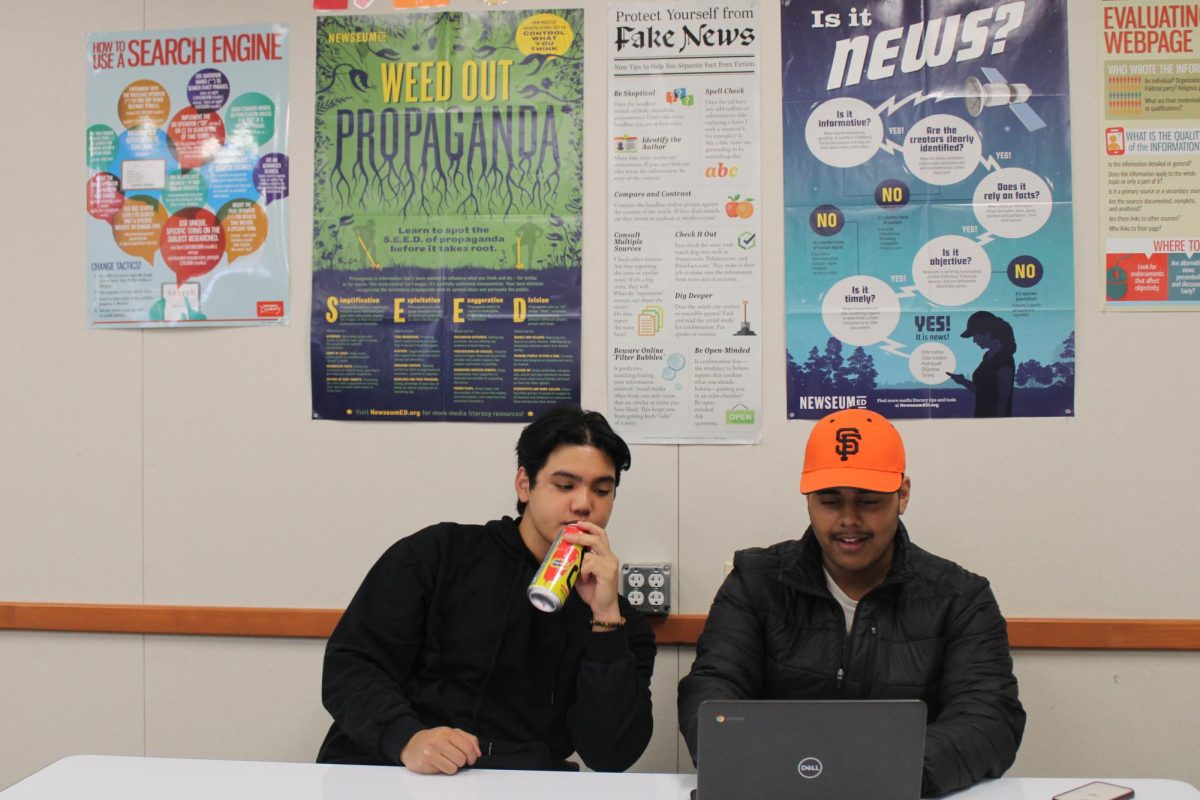
Sophomore John Nguyen, left, and junior Ayushman Bhattasali study in the library’s technology corner, where informational posters about misinformation through media can be found.
Story continues below advertisement
More to Discover
About the Contributors
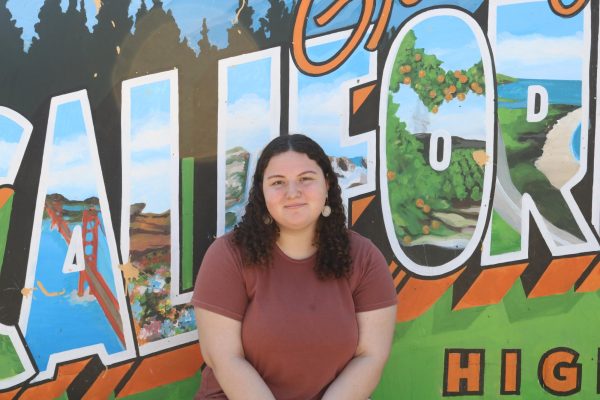
Daniela Noubleau, Ad Manager
Senior Daniela Noubleau is back for her fourth year of incredibly prestigious peak journalism at Cal High! She started doing advertisements last year, and this year she hopes to continue scavenging for more (it’s true she loves her job!). She also enjoys the simpler things in life like reading and gardening. Her favorite vegetables to grow are carrots, and she pretty much likes every book genre, though recently she’s been reading about Norse and Greek mythology. She might also occasionally find herself liking poetry even though most of the time it might be her worst enemy. She’s excited for the future after she graduates hoping to attend a good college and travel around the world the most she can. Unfortunately before she does all of that she has to survive college apps and of course, the wrath of senior year.
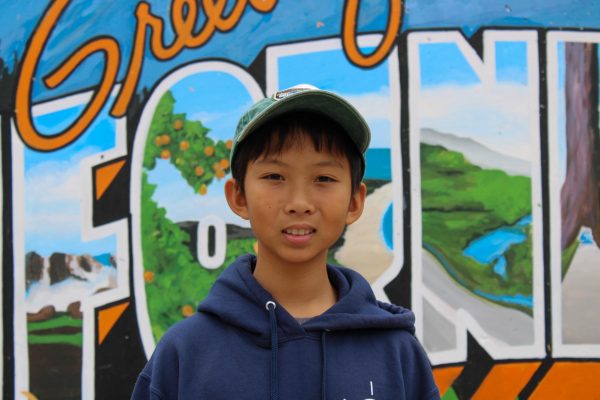
Ian Cheng, Staff Writer
Sophomore Ian Cheng is excited to be part of the Californian staff. He is interested in photography and interviews. He is interested in newspaper because he has had some experience in photography in middle school. He hopes to learn more about news reporting in newspaper class. His hobbies include building legos, playing piano, and coding. He also likes to swim and likes watching Star Wars or Harry Potter.