When it comes to books, the conversations just never stop.
Whether it’s debating about character dynamics or bonding over how much they love a series, people’s discussions about books have a way of lighting people up.
People can travel the world through a book, all in the comfort of their own living rooms. They unlock unknown worlds and fantasies, and create pathways to escape the dull reality of everyday life, even if it’s just for five minutes.
But sometimes it feels like five minutes is all a high schooler gets to actually sit down and enjoy a book.
Many students are so swamped with academics, sports, jobs, and other extracurricular activities that they just don’t have enough time to read.
So the question arises: How much do Cal High students actually read?
The Californian emailed a survey to all students asking about their reading habits. Of the 116 who responded, 74 of them (63.8%) indicated that they enjoyed reading.
“[By reading] you can open up new thought processes and think about things you hadn’t thought about before through fictional scenarios,” freshman London Ferguson said.
In the same survey, 59 of 116 students, or 50.9%, said they didn’t have time to read because of various reasons, including homework and after-school sports. Because students are so busy, they often find it hard to make time for reading while still getting enough rest.
“There is always time if you give up sleep,” sophomore Bryan Magee said.
Of course, there are students who don’t read because they don’t want to, or would rather be on their phone.
In an era where technology reigns supreme, this is expected, and not uncommon. Ten of 116 responders (8.6%) said that they would rather be on their phones than read a book.
“I don’t want to be just like a zombie [on my phone all day], but the fact of the matter is that I do reach for my phone more often than I do for a book,” senior Ren Guo said.
But it’s not just about whether students like reading or not. It’s also about the book.
Many students responded saying their enjoyment for reading depends heavily on whether they like a book.
“Nowadays, I feel like it’s really hard for me to start reading, because I get bored so quickly,” Guo said.
Research has shown that reading and literacy rates have gone down in recent years because of the rise of technology and artificial intelligence.
“Technology is playing a significant role because many young people have grown accustomed to instant gratification through short-form content and other fast-paced media,” English teacher
Ashley Tran said. “As a result, when they encounter more challenging texts that require sustained focus and effort, some develop a sense of learned helplessness or lack the motivation to work through the difficulty.”
While this may be the reality Cal students are currently facing, it does seem the number of students reading this year has actually increased.
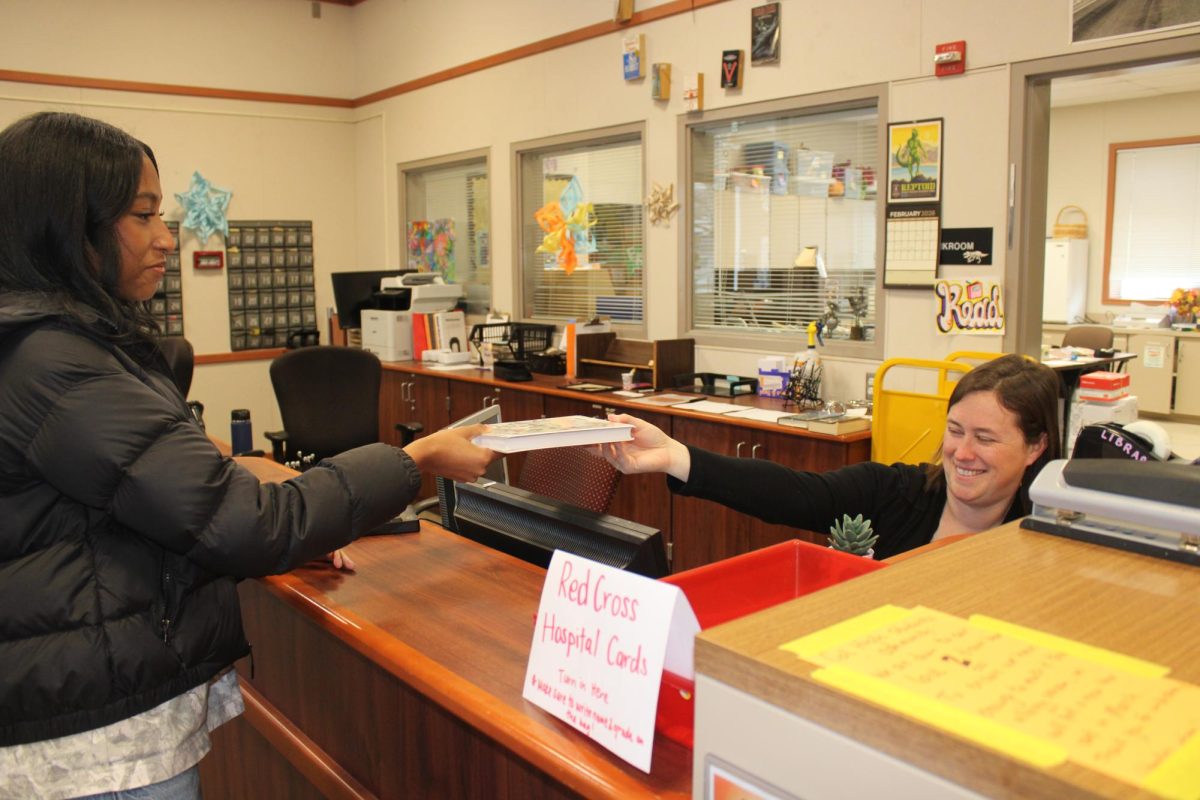
“We have seen an uptick in book checkouts this year, partly because of the cell phone policy,” said librarian Jessica Bailey, alluding to the school district’s new policy that bans cell phones during instructional time. “So it’s actually trending a little bit in the right direction.”
Results from the survey indicated that the most popular genre among students was fantasy with 74 of the 116 responders (63.8 %) said they mainly enjoy reading this genre. Mystery novels were a close runner-up.
“I like to read fantasy and sci-fi books because I feel like they have good conflict in them and let you escape to another world, more so than, say, realistic fiction,” Ferguson said.
Additionally, Tran said in her classes, students most commonly read fiction, fantasy, sci-fi, and a little bit of romance.
“It’s rare that I see students liking historical fiction and non-fiction,” Tran said.
Meanwhile, Bailey said she has observed students checking out more mystery books recently compared to past years.
“We’ve shifted from sci-fi and manga, which for a long time were our top two contenders,” Bailey said.
Results from the survey also show that while the majority of students enjoy reading, the number of books they read varies. When asked about how many books they read per year, 27 of 116 responders (23.3%) said they read 20 or more books annually. But the same amount of people said they read fewer than five books per year.
Many responses in the survey conveyed how students wanted to read more books, but just weren’t able to find the time.
“It does take time to sit down and immerse yourself in a book if you’re really busy,” Tran said. “A nice way to engage with texts [despite] not reading on a page would be listening to audio books while doing day to day things.”
Bailey also mentions the importance of reading and how it’s just about making time in your day for that quality reading time.
“Whether it’s you carving out 15 minutes before bed or having a routine that works, every little bit helps,” Bailey said.
Books have been around for centuries, and ever since their debut more than 5,000 years ago, they have captured the hearts and minds of humans to this day. Whether people have the time or not, fantasy, nonfiction, paperback, or e-book, there will always be a book for everyone.