YES
The advent of social media platforms such as Instagram or TikTok has given students access to a wide network of thoughts and ideas.
Because of this, students expressing their political beliefs on social media platforms is not only natural, but beneficial.
Students frequently turn to social media to explore and engage with the world around them. This engagement has an educational side.
A 2023 study by researchers from the University of Colorado Boulder found a positive relationship between online political expression and political knowledge, suggesting that participation deepens understanding.
A functioning democratic society depends on citizens who can evaluate competing claims and make reasoned decisions.
If the purpose of education is to prepare students for their roles within society, then students should be given the opportunity to practice democratic skills rather than to be shielded from the political world.
Preventing students from engaging with political discourses does not prepare them for adulthood but delays their development as informed participants in civic life.
Freedom of speech has a history dating back to ancient Athens and is one of the most important rights granted in the U.S. Constitution.
Encouraging students to exercise this right is not a threat to society, but vital to the function of a democratic one.
Or, as famous English philosopher and economist John Stuart Mill explained, silencing the expression of an opinion disgraces the human race. Society thrives on the collision of ideas.
Historical figures from Socrates and Thomas Jefferson to contemporary ones like Hasan Piker and Charlie Kirk, whose videos draw millions of followers today, all champion debate and free speech.
This debate is how society improves. Old ideas can only be improved upon if they are challenged. Although critics contend that the speed at which unregulated information spreads on the internet leads to disinformation, silencing student voices doesn’t stop this proliferation and can lead to deeper problems.
Distorted information and intense political discourse is something that students will encounter, no matter how hard they try to avoid it.
Students can’t be protected from the world forever, which is why learning skills is so important. We don’t shy away from letting students experiment with employment, managing money or driving a car.
So why should we bar students from interacting with politics?
Students cannot build the skills necessary to identify and counter misinformation if they never engage with it. Rather than fueling divisions as many may fear, political engagement online can help introduce students to political diversity.
Instead of trying to shield students by restricting student expression, schools need to equip them with media literacy and responsible communication skills. This way, students can be taught to identify biases, verify sources and understand algorithms that will shape their future political world.
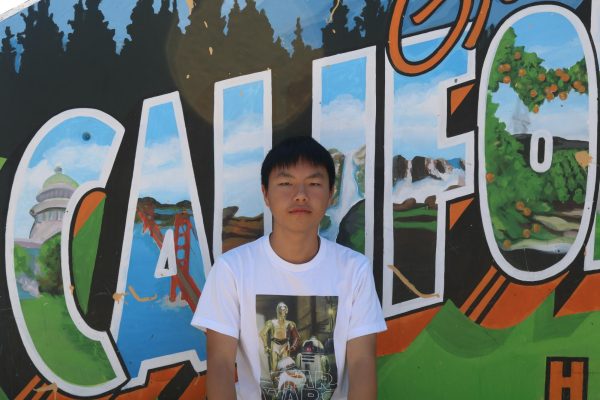
Larry Tang, Staff Writer
NO
Students posting political opinions online has now become as normal as posting photos, but the majority of them don’t fully understand the impact their words can have.
A single post on social media is able to reach hundreds of students in minutes. When students share political opinions online, the posts can quickly spread beyond their original context and can be seen as a fact rather than an opinion.
Social media allows students to share political opinions instantly without any editorial review.
Unlike credible news, posts on platforms such as Instagram, TikTok and other apps are published immediately to a wide amount of people.
According to the Pew Research Center, teens increasingly rely on social media for news, with about 90% using platforms like YouTube and more than half using TikTok and Instagram, showing how heavily teens rely on social media.
Social media algorithms prioritize engagement, often boosting the most emotional information rather than the most accurate.
The Stanford History Education Group explains that many students struggle to distinguish reliable information. As a result, political opinions can be spread quickly and easily without proper verification.
A major issue with social media is context collapse, where a post intended for a specific group is seen by a larger and more diverse audience. This can cause political opinions to be misunderstood, especially when viewers do not know the background or intent of the post.
Something meant as a personal opinion between friends can be seen as a public statement or even a source of information. This makes it difficult for students to control how their words are interpreted once they are shared online.
According to the American Psychological Association, social media can increase stress and influence among teens. Students who post political opinions on social media can also face strong social pressure or backlash from their peers.
While social media allows students a powerful place to share their voices, it also comes with many risks like misinformation, pressure and lack of accountability. Unlike real journalism, it doesn’t require the publisher to fact check their post, which can change how political opinions are shared and understood.
Finally, while social media can provide people a platform to express their political opinions, it also comes with responsibilities many users overlook. The speed and scale of which a post can influence others before they are fully verified is truly alarming, and students need to be more aware of how quickly information spreads online.
Students should become more careful before posting political or controversial posts by checking credible sources, and considering how their words can be interpreted.
According to United Nations Education, Scientific and Cultural Organization, media and information literacy is essential for helping young people evaluate online content and engage responsibly online.
Social media is not going away any time soon, and neither is political discussion online. But this shouldn’t mean every opinion should be posted publicly. If you wish to share your opinion online, slow down, check for reliability and think about how your words/actions can be seen or misunderstood.
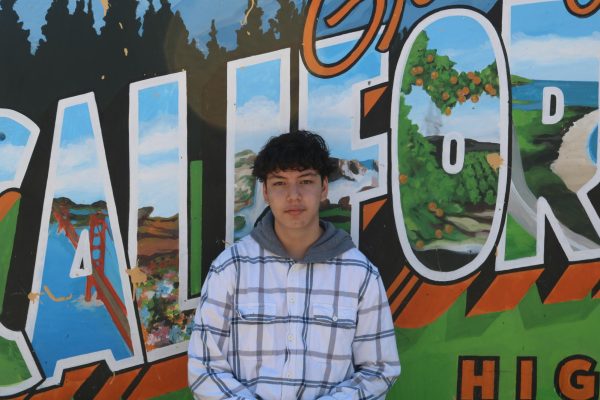
Camilo Sandoval, Staff Writer