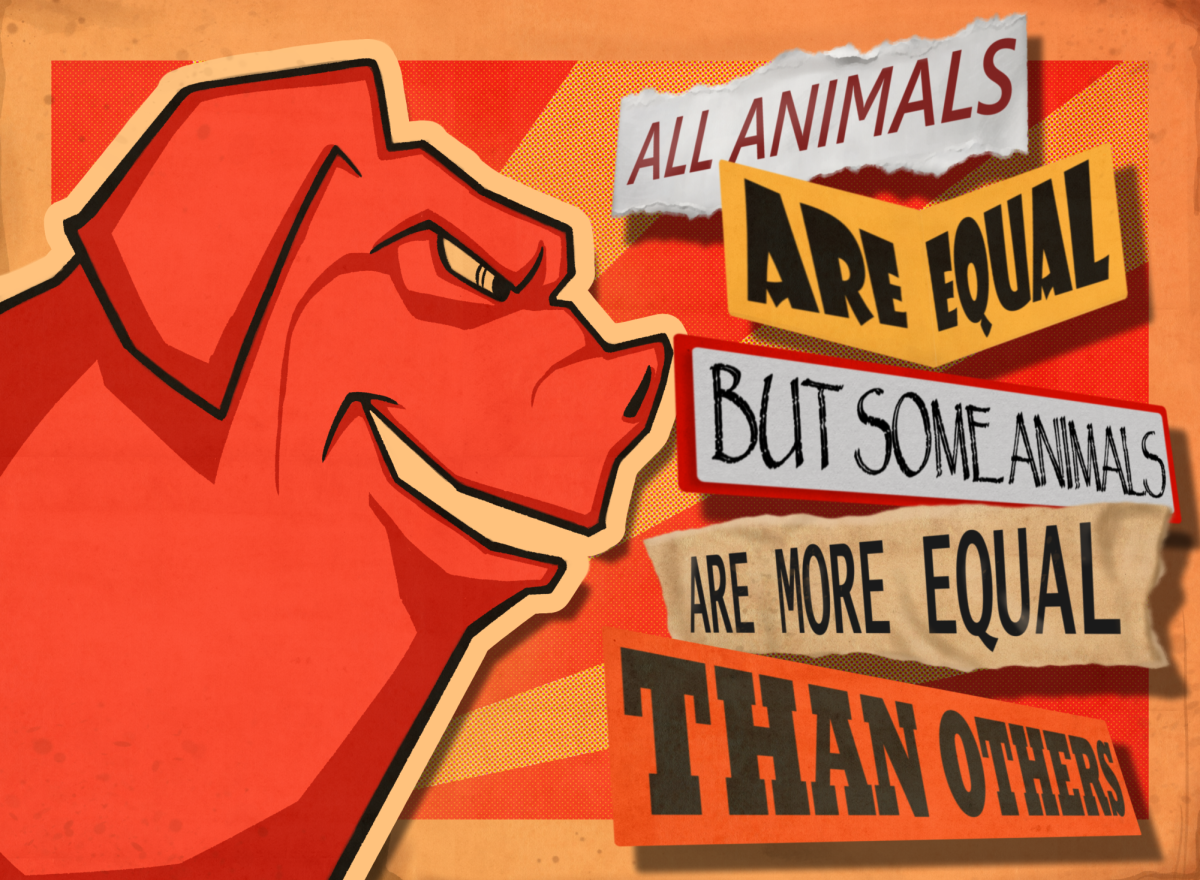
“All animals are equal, but some are more equal than others” is a quote from George Orwell’s iconic novella, “Animal Farm.”
The story follows a group of farm animals that overthrow their human farmer to create a more equal society by establishing “Animalism.”
Directed by Andy Serkis, the new animated “Animal Farm” movie hit theaters on May 1, marking the third main film adaptation of Orwell’s classic.
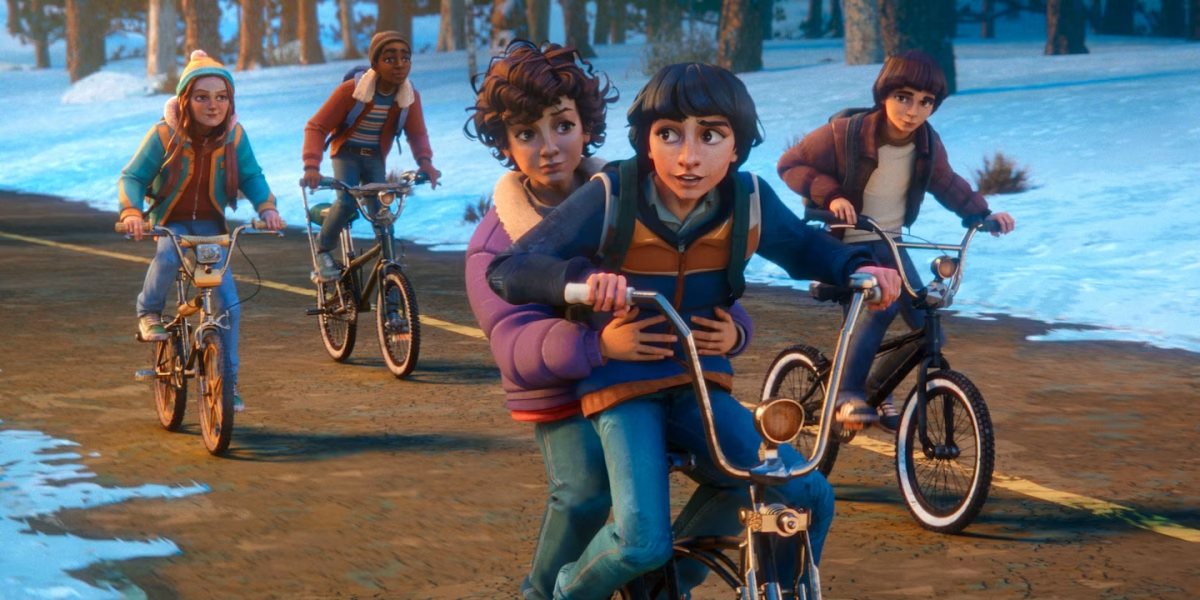
The film features an all-star voice cast including Emmy winner Seth Rogen, “Stranger Things” actor Gaten Matarazzo, Oscar winner Woody Harrelson, and Serkis himself.
The first film adaptation of “Animal Farm” was released in 1954 and used hand-drawn animation figures. The book’s second adaptation was a live-action version of the movie released in 1999.
The new adaptation introduced characters that were originally not in the book. This includes Lucky, a piglet, and Frieda Pilkington, a human who wants to take over the farm. By adding new characters, the adaptation takes on a different approach to Orwell’s novella.
Rather than being an allegory for communism or “Animalism,” the film focuses more on capitalism as the main theme.
Serkis received backlash for reversing Orwell’s anti-totalitarian message.
Students who have read the book believe that these differences will have drastic changes to the book’s original message.
“Why are we adapting this book into a capitalist movie?” sophomore Samraj Dey said.
The film’s trailer also displays a more family-friendly and light-hearted approach, including jokes and gags, which were not found in Orwell’s original novella.
Serkis said in the “Flip Your Wig” podcast last September that his adaptation would present a more “contemporized” version of the book.
“We’ve couched it in such a way that it feels like a family film, but the darker themes are all there,” Serkis said. “The Orwellian nature of it is incredibly, powerfully sort of under the surface, but we’ve smuggled the politics in so that it’s a debate that can be opened up between young people and families and old [people].”
Sophomore Sahasra Obulam agrees with Serkis, saying these changes won’t be as drastic as people think.
“The trailer shows the light parts of the movie,” Obulam said. “Once we see the movie, we’re going to see the darker parts.”
But a particular scene in the trailer has caused a lot of controversy. In the novella, the animals wrote the “Seven Commandments,” in which one commandment states that “No animal shall drink alcohol.” In the trailer, the commandment was changed to “No drinking naughty juice.”
Students believe that the novella’s dark theme and message is being misconstrued by silly changes like this.
“Isn’t the book focusing on more serious topics?” sophomore Megan Chiu said.
Students also think that the animation style of the new film is too childish, which can give people a different impression of the original message of “Animal Farm.”
“The movie just looks like a kids movie,” senior Tabitha Israel said. “It’s going to be hard to realize that the animals are representing certain people”.
When Israel mentioned “certain people,” she referred to how the characters in “Animal Farm” are supposed to represent historical figures such as Joseph Stalin, Leon Trotsky, Karl Marx, and
Vladimir Lenin from the infamous 1917 Russian Revolution.
Junior Mia Hong found the trailer interesting but agrees that the film’s visuals are more appealing for children.
“The movie will definitely change [Orwell’s message],” Hong said. “It’s like a whole new story.”
A two minute trailer can show audiences a lot about a movie, while many believe that a trailer is not necessarily indicative of the final film.
Dey made it clear that the movie will not do well at the box office and the film needs to make changes if it wants to do well.
“They have to turn this thing around to make it more authentic, feasible and serious,” Dey said.