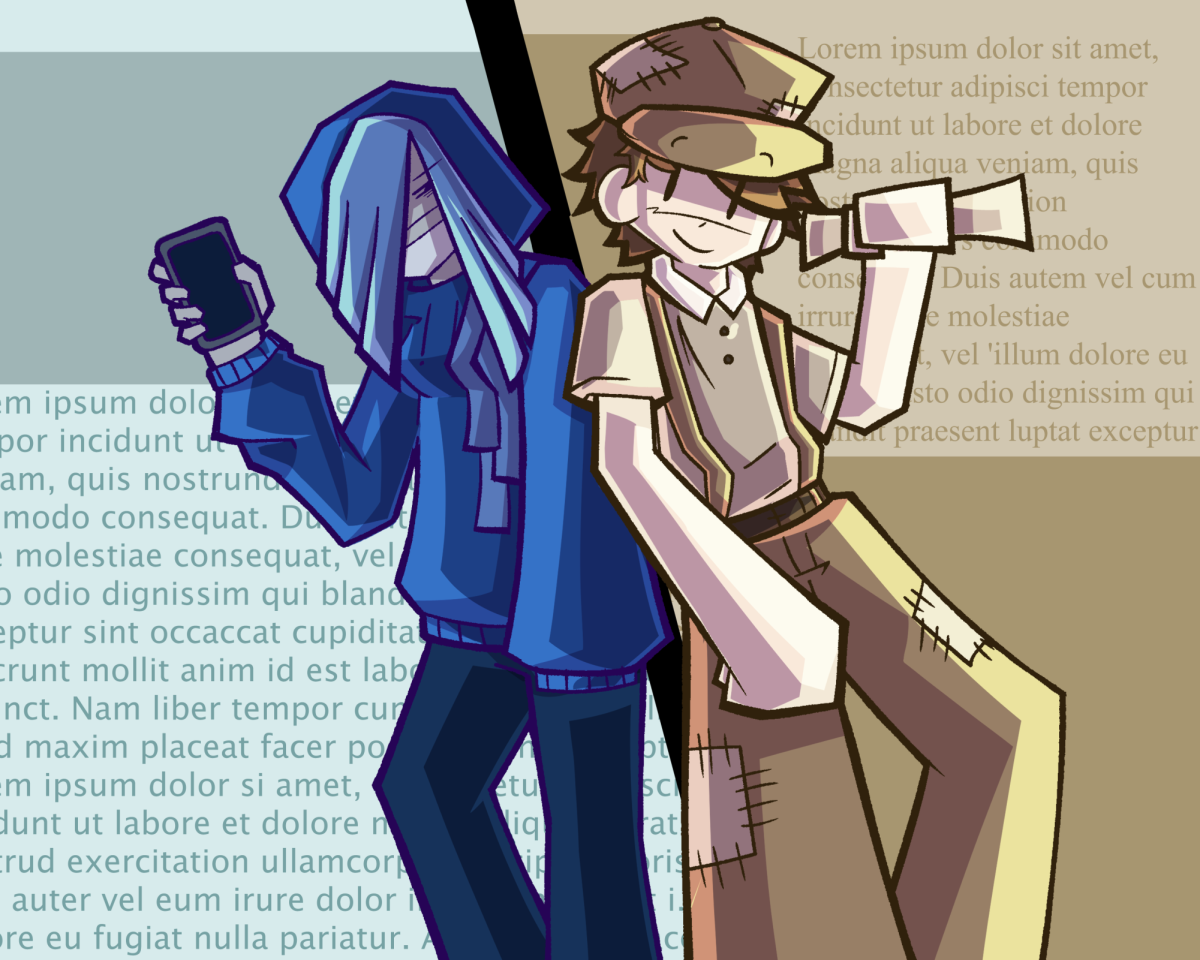
Newspapers have existed for many generations.
But in the current day, the more popular way to read news is through online newspapers and news outlet websites.
For something that’s existed for more 400 years, printed newspapers have definitely become much less relevant.
In the mid-15th century Johannes Gutenberg invented the printing press, which allowed the printed word to be distributed faster than ever before.
But with the constant advancements of technology, it’s safe to say that most people would much rather read their news digitally.
Social media plays a big part on how people get their news today, too.
According to the Pew Research Center, about 53% of American adults say they sometimes get their news from social media. The same study showed 38% get their news from Facebook and 35% from YouTube.
In an article published by the Press Gazette, 60% of US citizens indicated they prefer reading their news online. But when it comes to magazines, the print version is preferred.
Technology is constantly evolving each day and having the world’s latest news at your fingertips makes things much easier than buying a newspaper that can get wet or ripped.
By the time a print version of the paper has been delivered, many of its headlines have been circulated on television and social media platforms.
In a study made by the Digital Commons at The University of South Florida, nearly all stories in the sample appeared on the newspapers websites and story content was the same 96% of the time.
The same study found that 85% of print stories were published with at least one contextual element, but only 58% of online stories had at least one such element.
In today’s world, when major events have happened, people either turn on their televisions or check their phones. They don’t go outside to check their front porches to look for their newspaper anymore.
While print media can encourage a deeper understanding while reading, eliminating distractions like pop-up ads and random links one might accidentally click, online articles make it easier for the reader to fact-check the information that is published.
It’s as simple as clicking the phrase that is being highlighted or underlined to make sure that the information is reliable.
Print newspapers can contribute to deforestation and waste. Once a print has been read, it’s outdated and evolves into a fly watter, packing paper or a kitty litter box liner.
News organizations are unable to update the story other than issuing a follow-up story by printing more and more newspapers, whereas on their websites they can quickly make changes to make stories more current.
According to HBI Communication, every fifth tree cut down is used for the newspaper industry, a very high and long-term burden on the environment.
Reading through digital newspapers can also be made more accessible to those with disabilities. Features like adjustable text sizes and text-to-speech are beneficial to individuals with visual impairments and weak vision, offering a more inclusive and convenient reading experience.
Yes, online news outlets do track the reader’s data but today we have tools to limit it. We can simply click “No, thank you” when a website asks if it can use cookies. Even extensions like ad-blockers can further protect our data online.
Plus, in today’s fast-paced society, print newspapers often fail to hold a reader’s attention. It’s much easier to consume short form content by scrolling through dozens of topics in less than an hour than reading a whole article that can be more time consuming.
According to another Press Gazette article, the average online visitor spends less than 30 seconds per day reading news articles, whereas print readers average about 40 minutes.
Leaning into digital platforms not only benefits the reader but it benefits the publisher too.
Mistakes made in print can be expensive to reprint, and a follow-up story that will be issued later on has a much greater chance of being outdated by the time it’s published.
Editing and updating mistakes are less costly and much easier to do on a digital platform.
Print newspapers still hold their value, representing a different era in journalism and reporting history on a single page. But news is meant to report events to the public as soon as possible, and technology has made this achievable.
As a result, print newspapers simply aren’t relevant anymore.