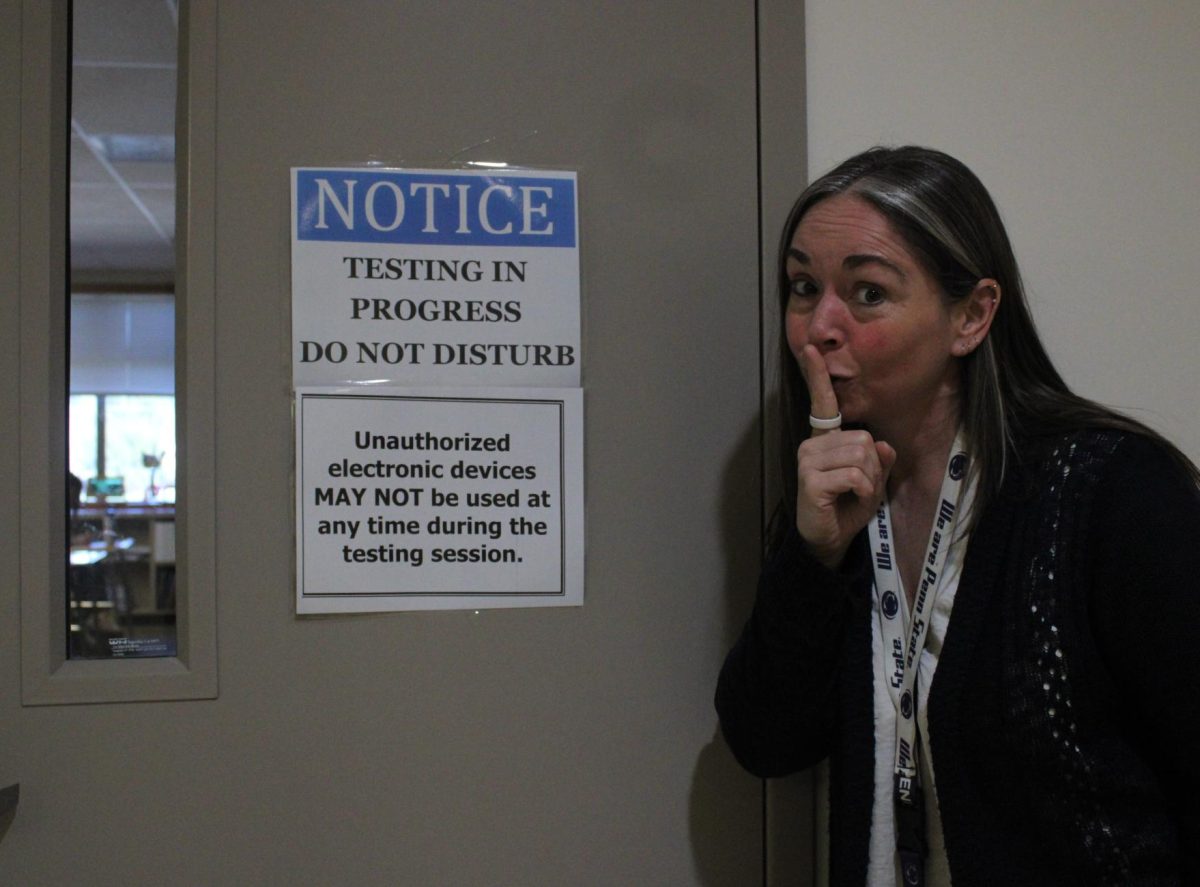
In kindergarten, students stored their valuables in cubbies so they wouldn’t be lost or damaged throughout the day. Now in high school, students are forced to put their cellphones in caddies all class period, not for the protection of their belongings, but as a restriction.
In addition to the no-phone policy being implemented at the beginning of this school year, Cal High administrators decided to impose further restrictions on students’ technology this semester. Not only is cellphone use still strictly forbidden during class time, but students are now required to store their phones in caddies for the entire period.
During the first semester, teachers were given the option of having students use the phone caddies or store their devices in their backpacks.
While this new policy is meant to improve students’ quality of learning, the phone caddy rule is overly restrictive. If the school’s goal is to teach students to ignore distractions caused by phones, confiscating them for the whole class period is not the solution.
There are absolutely times, such as during lectures, when phones shouldn’t be out at all. But students won’t become less reliant upon their devices until they make the conscious decision to ignore notifications and distance themselves from their phones on their own.
Forcing students to give up their phones only causes them to become more glued to their screen the second they get their device back. Students who are fed up with the policy have even found ways around the policy by putting a fake phone in their slot and keeping the real one with them.
The caddy system that is meant to benefit students’ learning has often had the opposite effect, causing distractions during class.
When an alarm or ringtone inevitably goes off, teachers have to stop what they’re doing to search the whole array of phones for the cause of the disturbance. What should’ve been a five second interruption is now a whole ordeal that distracts everyone in the classroom.
Another aspect to keep in mind is how valuable phones are in case of an emergency. They are the most important tool students have to contact family or call for help.
Many students probably wanted to do this, or reply to parents’ concerned texts and calls, when Cal went into a secure campus on consecutive days because of threats to campus the last week of January.
With everyone’s phones stored in one location, sometimes away from the door, students would have an extremely difficult time grabbing theirs in the rush to evacuate. This would only cause further chaos in an already risky situation.