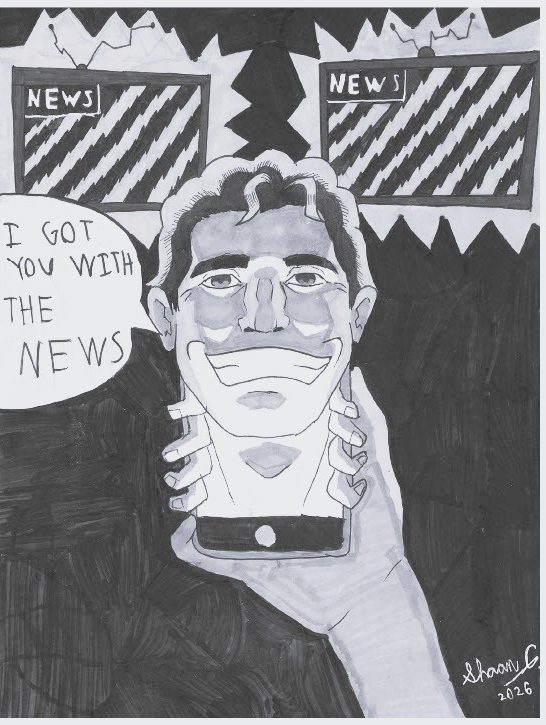
If you asked someone what the last TikTok they watched was, they probably couldn’t tell you. But if you asked them the last time they used their phone, it’d be a weird question since we use them everyday.
Whether it’s phones, laptops, iPads, or smartwatches, devices feed us nonstop information. And to satisfy the insatiable hunger for dopamine, we keep coming back for more.
According to the Center for Disease Control, more than 50% of teens spend four-plus hours on their personal devices a day, which is a gross understatement for many high school students.
The bottom line is we need to detox from this information overload, constant scrolling, and time spent staring at screens.
Devices give people access to everything from politics to entertainment to other people’s lives. It makes us feel the entire spectrum of emotions, without needing to get out of bed.
This isn’t good. Countless studies show that these casual habits trigger the release of dopamine, a chemical in the brain that is typically reserved for rewarding positive actions.
While scrolling or watching likes go up on a post can provide the same dopamine rush, the brain begins to crave this quick chemical stimulation. This accessible dopamine can shrink attention spans and make people rely on instant gratification.
People who are plagued by procrastination and push their difficult tasks away to enjoy other simpler pleasures are a prime example of this effect.
It doesn’t stop there. Overuse of devices and social media is linked to higher levels of depression, anxiety, and even sleep problems. This is all for the joy we get from those 30-second clips we can’t even recall seconds later.
Doom scrolling is essentially flipping through emotion and feeding the brain with feelings. Whether it is a video of a dog dying that leaves someone crying alone in their room or a sports edit that brings about a smile, this generation is replacing the effort it once took to feel something with the swipe of a finger.
Screen time is also extremely time-consuming. If a 13 year old spends four hours a day on devices, by the time they graduate high school they would have logged more than 10,000 hours in front of a screen.
Humans were never meant to see this much of anything, leading to media saturation overload, a term coined by Dr. Don Grant, an expert in media psychology and mental health.
Feeds are designed to keep viewers engaged, and to do that, they push radical news and tragic headlines that garner attention. True, devices aren’t the root of all evil. But they do leech precious time, distance people from their lives, and ruin our mental health.